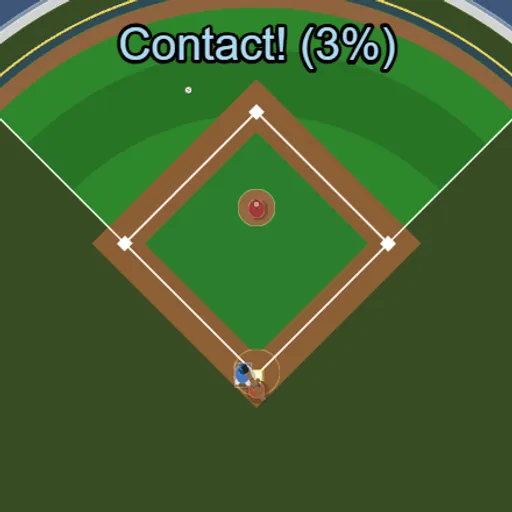
Backyard Slugger is a top-down baseball batting game where you face pitch after pitch in a small ballpark. All you do is swing, so timing is everything. The goal is to send the ball fair, between the two foul lines, and over the outfield fence for a home run.
How Backyard Slugger Works
After you press Play, the pitcher starts throwing. Each pitch varies a little in speed and location. Roughly two in three head for the yellow zone painted over home plate, and the others go wide, high or low.
Swinging is quick, close to 0.25 seconds from start to finish, as the bat sweeps across the zone. If you connect, a percentage shows how clean the contact was. The ball flies off square to the bat’s angle at contact, so swinging early or late sends it toward a foul line.
The count works like a real at-bat. A whiff counts as a strike, and so does a good pitch you let pass. A pitch that misses the zone counts as a ball. Three strikes is an out, four balls is a walk, and either one wipes the count clean.
Your First Few Minutes
- Press Play and watch two or three pitches go by without swinging.
- Notice which pitches cross the yellow zone and which ones miss.
- Swing at the next good pitch with Space, a click or a tap.
- A foul to the left means you were early, so wait a bit.
- A foul to the right means you were late, so start sooner.
Controls for Backyard Slugger
| To do this | Keyboard | Mouse | Touch screen |
|---|---|---|---|
| Swing the bat | Space (gamepad A) | Left click | Tap the screen |
| Call the next pitch right away | Enter | not used | not used |
| Reset your session stats | R | not used | not used |
| Pause, restart or quit | Esc | Click the menu icon (top right) | Tap the menu icon (top right) |
What It Trains
This game is about reaction timing. You learn to start the swing before the ball reaches the plate, since the bat takes time to sweep through.
It also builds focus and judgment. Each pitch is a quick yes-or-no call on whether it will land in the zone, and patience earns walks while chasing earns strikes.
Strategy Notes
- Swing ahead of the ball. Begin moving the bat before the pitch reaches the plate.
- Take the bad ones. Pitches outside the zone become balls if you leave them alone.
- Hunt the sweet spot. Contact near the bat’s end and center line gives the fastest ball.
- Correct after fouls. Use the direction of each foul to nudge your timing.
- Call pitches with Enter. It skips the short pause and keeps a steady rhythm.
Good to Know
A tap on any part of the screen swings the bat, so phones work, but the view is wide, so turn the screen sideways. Sessions can be as short or long as you like. It was built by Frank Force using LittleJS, with Box2D handling the physics.